Comprehensive Guide to GST Calculation
Goods and Services Tax (GST) is a comprehensive indirect tax levied on the manufacture, sale, and consumption of goods and services throughout India. It replaced multiple cascading taxes levied by the central and state governments. Whether you are a business owner generating invoices or a consumer verifying a bill, understanding how GST is calculated is essential.
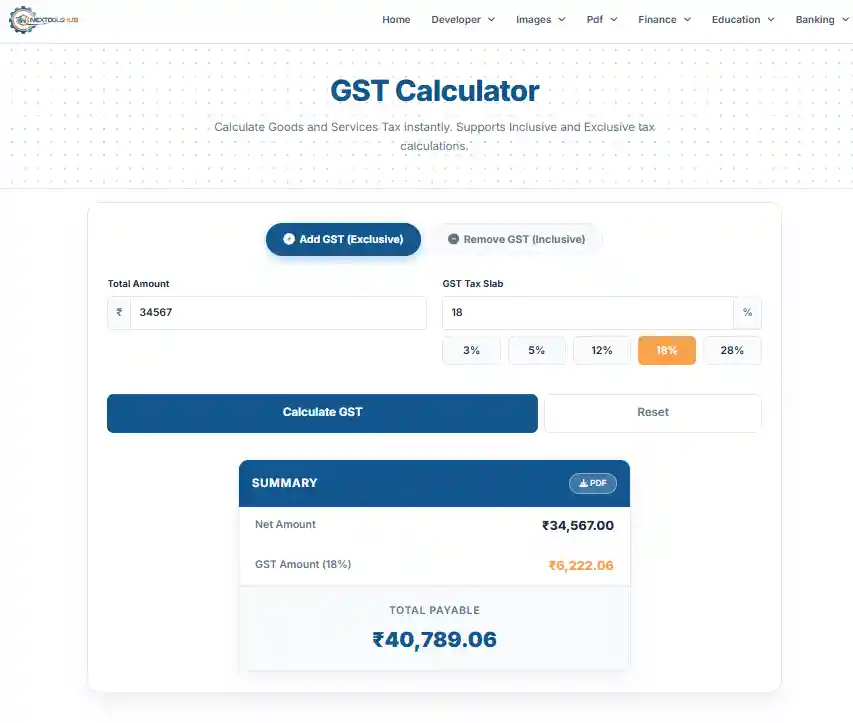
Two Calculation Methods
- GST Exclusive: Tax is added on top of the product price. (Price + GST = Total)
- GST Inclusive: Tax is included in the final price. The calculator works backward to find the original cost.
GST Tax Slabs in India
- 5%: Household necessities like sugar, spices, tea, coffee.
- 12%: Computers, processed food.
- 18%: Hair oil, toothpaste, capital goods, services.
- 28%: Luxury items, automobiles, aerated drinks.
Frequently Asked Questions
The end consumer bears the cost, but businesses collect and deposit it to the government.
Yes, for businesses with turnover > ₹40 Lakhs (goods) or ₹20 Lakhs (services).
Intra-state sales are split into Central GST (CGST) and State GST (SGST).
Integrated GST (IGST) applies to inter-state sales (between two different states).
Exclusive adds tax to cost. Inclusive means tax is already part of the MRP.
Harmonized System of Nomenclature code classifies goods for taxation globally.
Registered businesses can claim ITC on purchases used for business purposes.
Yes, dealers pay GST on the profit margin (Margin Scheme).
₹20-50 per day late fee plus 18% annual interest on unpaid tax.
Exports are zero-rated supplies, meaning no GST is charged on them.