The Power of Compound Interest: The Eighth Wonder of the World
Albert Einstein famously described compound interest as the "eighth wonder of the world," stating, "He who understands it, earns it... he who doesn't... pays it." This mathematical concept is the foundation of wealth creation for investors and the primary reason why debt can become overwhelming for borrowers. At its core, compound interest is the cycle of earning "interest on interest," causing money to grow at an exponential rate rather than a linear one.
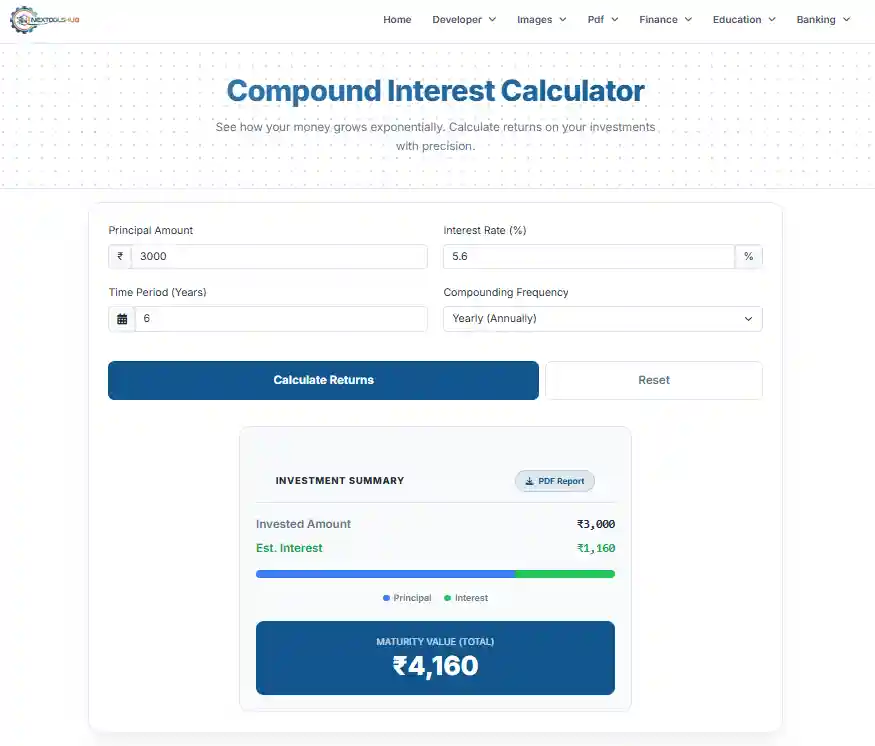
What is Compound Interest?
Unlike Simple Interest, which is calculated only on the principal amount, Compound Interest is calculated on the principal amount plus the accumulated interest from previous periods. This small distinction creates a snowball effect.
For example, if you invest ₹10,000 at 10% annual interest:
Year 1: You earn ₹1,000. Total = ₹11,000.
Year 2: You earn 10% on ₹11,000 (not just ₹10,000). Interest is ₹1,100. Total = ₹12,100.
Over 20 or 30 years, this difference becomes massive.
The Formula
A = P (1 + r/n)nt
Where: A = Final Amount, P = Principal, r = Annual Interest Rate (decimal), n = Compounding Frequency, t = Time in years.
The Impact of Compounding Frequency
The frequency at which interest is added to your account (compounded) significantly affects the final return. The more frequently interest is added (e.g., Monthly vs. Yearly), the faster your money grows because that new interest starts earning its own interest sooner.
- Yearly: Interest added once a year. Standard for many bonds.
- Quarterly: Added every 3 months. Common in savings accounts.
- Monthly: Added every month. Common in high-yield accounts and loans.
- Daily: Added every day. Used in some credit cards (working against you!).
The Rule of 72
A quick mental math shortcut to estimate how long it will take to double your investment is the Rule of 72. Simply divide 72 by your annual interest rate.
Example: At a 9% return, your money will double in roughly 8 years (72 ÷ 9 = 8).
Strategies to Maximize Growth
1. Start Early: Time is the most critical variable in the formula ($t$). Starting 5 years earlier can often double your final corpus.
2. Increase Contributions: Regular top-ups to your principal accelerate the base on which interest is calculated.
3. Reinvest Dividends: Instead of cashing out earnings, reinvest them to fuel the compounding engine.