Online Stopwatch with Lap Timer for Accurate Tracking
Use this online stopwatch for accurate time tracking during workouts, study blocks, coding sessions, meetings, and productivity routines. Start, pause, reset, and record lap times instantly with a clean interface designed for quick control. It is useful for athletes measuring intervals, students managing focus cycles, and professionals tracking task duration for better planning. Because it runs in the browser, you can use it on desktop and mobile without installing an app. Lap support helps compare rounds and monitor progress over repeated sessions. If you need a dependable timer for training, revision, or daily habit building, this tool is a practical choice. Use this stopwatch for better time awareness, improved routine discipline, and consistent performance tracking throughout your day. Useful for exams, training drills, office tasks, and personal productivity goals daily.
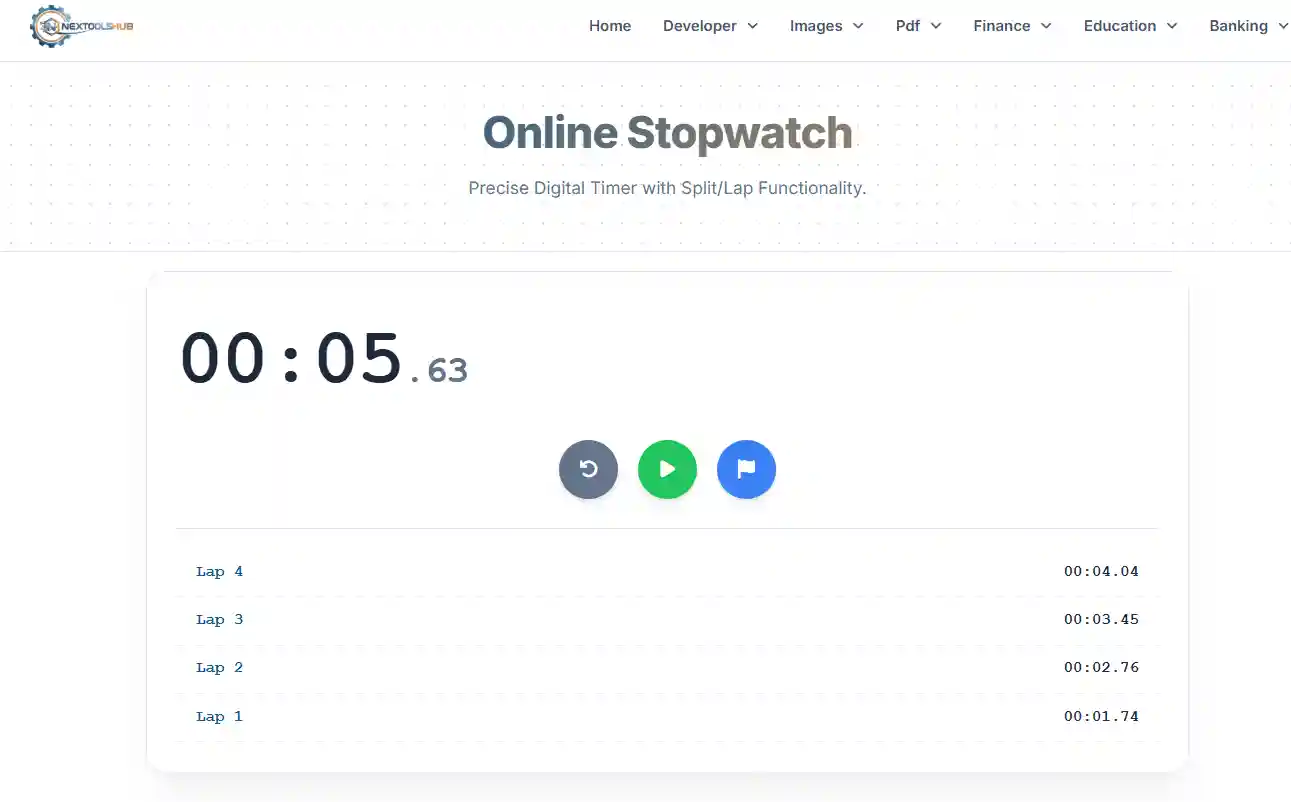
Online Stopwatch with Lap Timer for Time Tracking
Use this online stopwatch to track time accurately for workouts, study sessions, interviews, productivity blocks, and daily tasks. The timer supports start, pause, reset, and lap recording with a simple interface for quick control. It works smoothly on desktop and mobile without installation. This stopwatch tool is useful for athletes, students, and professionals who need reliable timing and performance tracking. Improve routine discipline, measure intervals, and monitor task duration with ease.