The Complete Guide to Indian Financial System Codes (IFSC)
In the modern era of digital banking, the ability to transfer funds instantaneously across the country has become a necessity. At the heart of this seamless financial network lies a unique alphanumeric key known as the IFSC (Indian Financial System Code). Whether you are paying a vendor, sending money to family, or receiving a salary, the IFSC code ensures that your hard-earned money reaches the correct destination without error. This comprehensive guide will navigate you through the intricacies of IFSC, its structure, its importance in various fund transfer systems, and how to stay safe in the digital banking ecosystem.
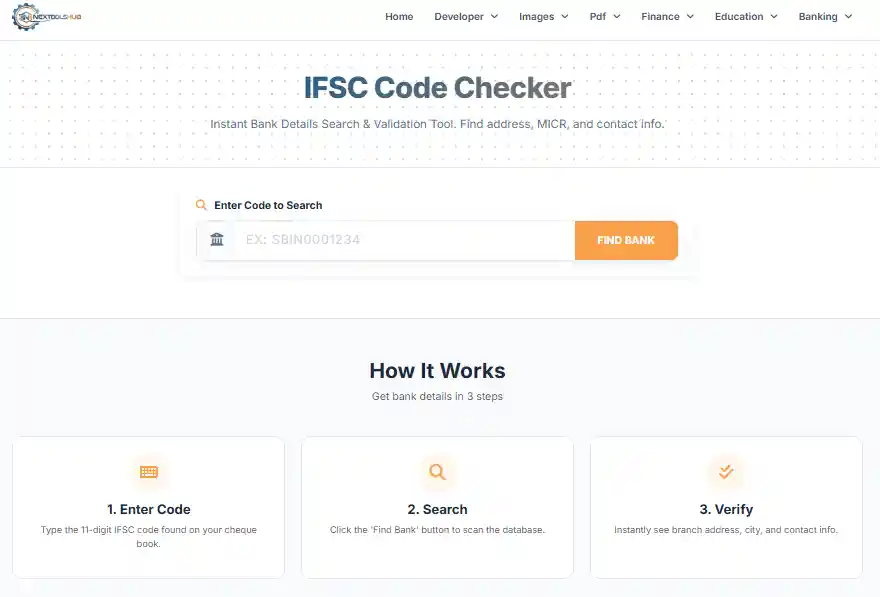
1. Decoding the IFSC Structure
The IFSC code is an 11-character code assigned by the Reserve Bank of India (RBI) to identify every bank branch participating in the payment system. It acts as a unique digital address for a branch. Let's break down the logic behind a code like SBIN0001234:
- First 4 Characters (SBIN): These are alphabetic and represent the bank's name (e.g., State Bank of India).
- 5th Character (0): This is always the number zero. It is reserved for future use.
- Last 6 Characters (001234): These are usually numeric (but can be alphabetic) and represent the specific branch code.
2. Modes of Fund Transfer Explained
IFSC codes are the backbone of three major electronic fund transfer systems in India. Understanding the difference between them can help you choose the right mode for your transaction.
| Feature | NEFT (National Electronic Funds Transfer) | RTGS (Real Time Gross Settlement) | IMPS (Immediate Payment Service) |
|---|---|---|---|
| Speed | Batches (every 30 mins) | Real-time (Instant) | Real-time (Instant) |
| Minimum Value | ₹1 | ₹2 Lakhs | ₹1 |
| Availability | 24x7 | 24x7 | 24x7 |
| Best Use Case | Salary, Bill Payments | High-value Business Txns | Urgent, Small to Mid Transfers |
3. The Impact of Bank Mergers
In recent years, the Indian banking sector has witnessed massive consolidation. Several public sector banks have merged, leading to changes in IFSC codes. Using an old IFSC code after the transition period can lead to failed transactions.
Key Mergers & Changes:
• Oriental Bank of Commerce & United Bank of India merged into Punjab National Bank (PNB).
• Syndicate Bank merged into Canara Bank.
• Allahabad Bank merged into Indian Bank.
• Andhra Bank & Corporation Bank merged into Union Bank of India.
If you hold an account in any of the merged entities, it is crucial to update your new IFSC code in your mutual funds, income tax portal, and insurance policies immediately.
4. IFSC vs. MICR: What's the Difference?
While finding your IFSC code, you might also see a MICR (Magnetic Ink Character Recognition) code. They serve different purposes:
- IFSC (11 Characters): Used for online electronic transfers (NEFT, RTGS, IMPS).
- MICR (9 Digits): Used primarily for processing physical cheques. It helps machines read the cheque details quickly. The first 3 digits represent the city, the next 3 the bank, and the last 3 the branch.
5. How to Find Your IFSC Code?
Apart from using our NexToolshub IFSC Checker, you can find this code in offline documents:
1. Cheque Leaf: Look at the top-left or bottom-center of your cheque.
2. Passbook: The first page containing your account details always lists the branch IFSC.
3. Bank Statement: Monthly account statements (PDFs) contain branch details.
6. Safety Tips for Online Banking
Verify Twice: When adding a new beneficiary, always verify the IFSC code. Entering a wrong code with a correct account number might send money to a different branch of the same bank, complicating the refund process.
Beware of Phishing: Never share your OTP or banking passwords with anyone claiming to verify your IFSC or KYC. Banks never ask for these details over the phone.