Comprehensive Salary Guide
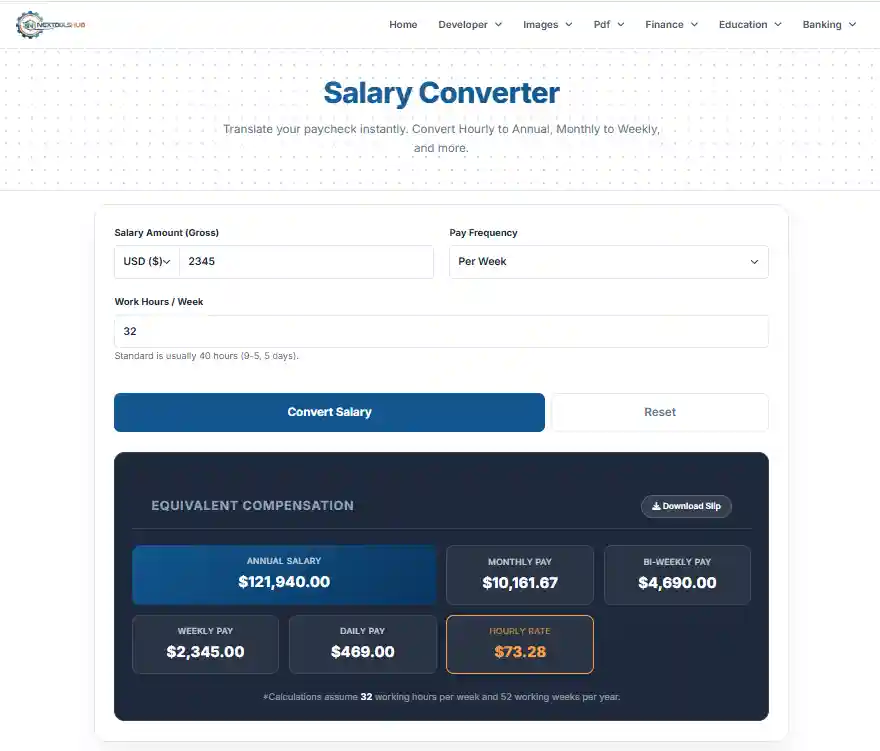
Understanding how your salary translates across different timeframes—hourly, weekly, monthly, and annually—is fundamental for financial planning. Whether you are analyzing a job offer, negotiating a raise, or budgeting monthly expenses, this clarity empowers you. Nextoolshub's Salary Converter breaks down your gross pay into digestible figures instantly.
Gross vs. Net Salary
- Gross Salary (CTC): Total pay before taxes and deductions. This tool calculates Gross Salary.
- Net Salary (In-Hand): Actual amount received in the bank after Tax, PF, and Insurance deductions.
Why calculate Hourly Rate?
Even if you are a salaried employee, knowing your hourly rate helps you:
- Compare Jobs: A job paying less annually but requiring fewer hours might have a higher hourly rate.
- Freelancing: Set a baseline for your freelance consulting fees (typically 2x-3x your salaried rate).
- Overtime: Verify if your overtime pay (usually 1.5x) is calculated correctly.
Common Deductions
Remember, the figures shown here are Gross. Your take-home pay will be lower due to:
1. Income Tax (TDS): Deducted at source based on tax slabs.
2. Provident Fund (EPF/401k): Retirement savings.
3. Professional Tax: State-levied tax (in some regions).
Frequently Asked Questions
Gross salary is the total amount before deductions (tax, insurance). Net salary is your 'take-home' pay after all deductions are removed. This calculator works with Gross Salary.
Standard calculation uses 2,080 hours per year (40 hours/week * 52 weeks).
Bi-weekly means getting paid every two weeks (26 paychecks per year). This is different from Semi-monthly (24 paychecks per year).
No, this calculator provides Gross equivalents. Tax calculations depend on country, marital status, and local laws.
Salaried roles usually offer stability and benefits. Hourly roles offer flexibility and potential for overtime pay.
Divide your weekly pay by the number of days you work (usually 5). Or divide annual pay by 260 working days.
No, we use the standard 52-week payroll year for consistency. Leap years add one day but rarely affect salary agreements.
It's best to calculate twice: once with base salary (guaranteed) and once with full package (including bonuses) to see the range.
CTC (Cost to Company) includes all expenses the company spends on you, including gratuity and employer PF, which may not be in your monthly cash flow.
Knowing your hourly rate helps compare jobs with different working hours and sets a price for freelance or overtime work.